年に3度、姿を変える大会を、ひとつのサイトとして機能させ続けるには。
最初に決めたのは、デザインではなく判断の拠り所でした。春・夏・秋で姿を変える大会を、一度きりの完成形ではなく、季節ごとに手を入れながら使い続けられる構造として設計する。来場者がどの大会の、どの情報や窓口へも迷わずたどり着けるよう、複数のチャネルを束ねて整理する。多言語対応や実装方針も、その判断軸からの帰結でした。

「大曲の花火」は、秋田県大仙市大曲で春・夏・秋に開催される3つの花火大会の総称です。PULPは公式Webサイトのリニューアルにあたり、企画、コンテンツ開発、UX・UIデザイン、実装までを一貫してディレクションしました。
目指したのは、魅力を伝えるだけではなく、来場者が必要な情報に迷わずたどり着き、安心して大会へ参加できる情報体験をつくることでした。
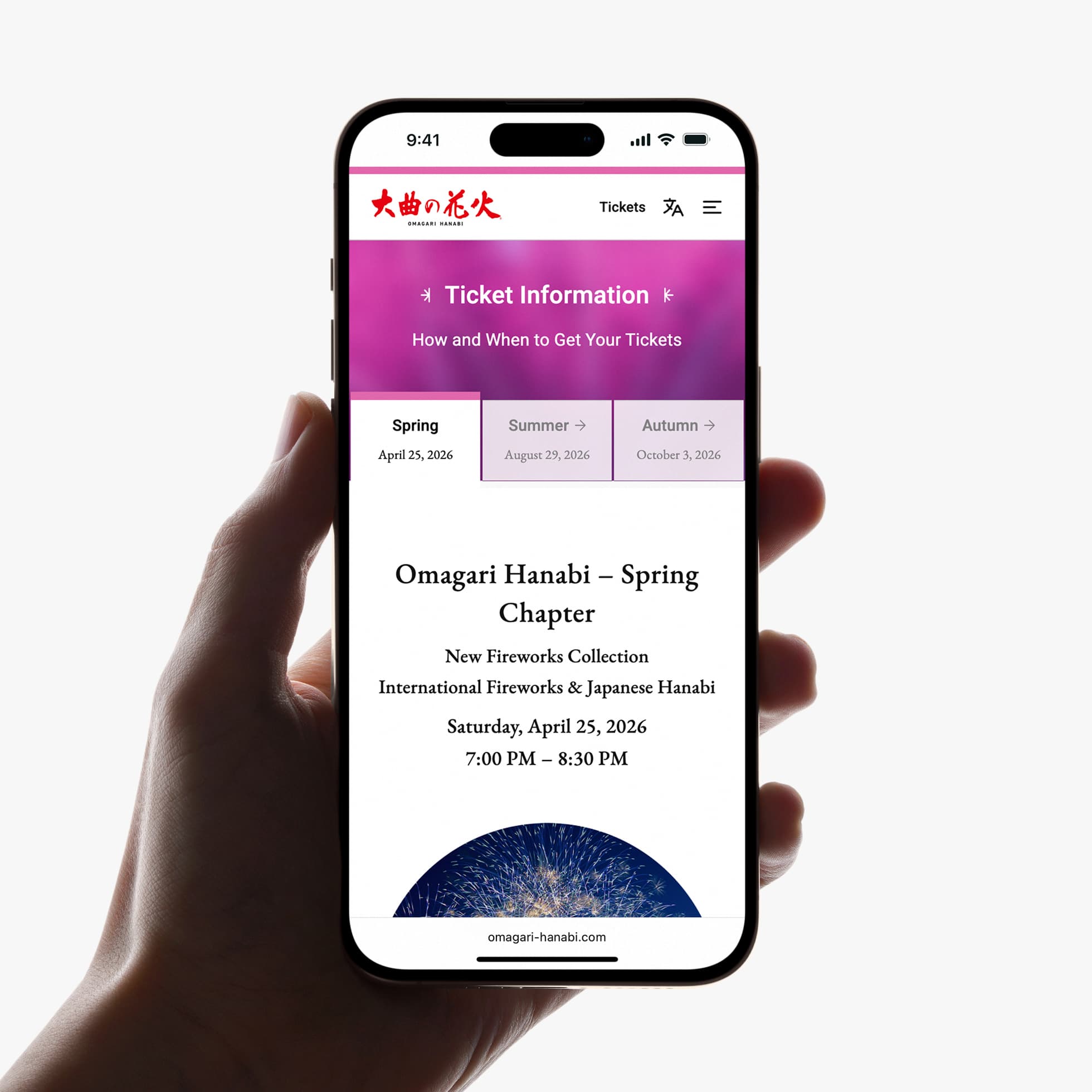
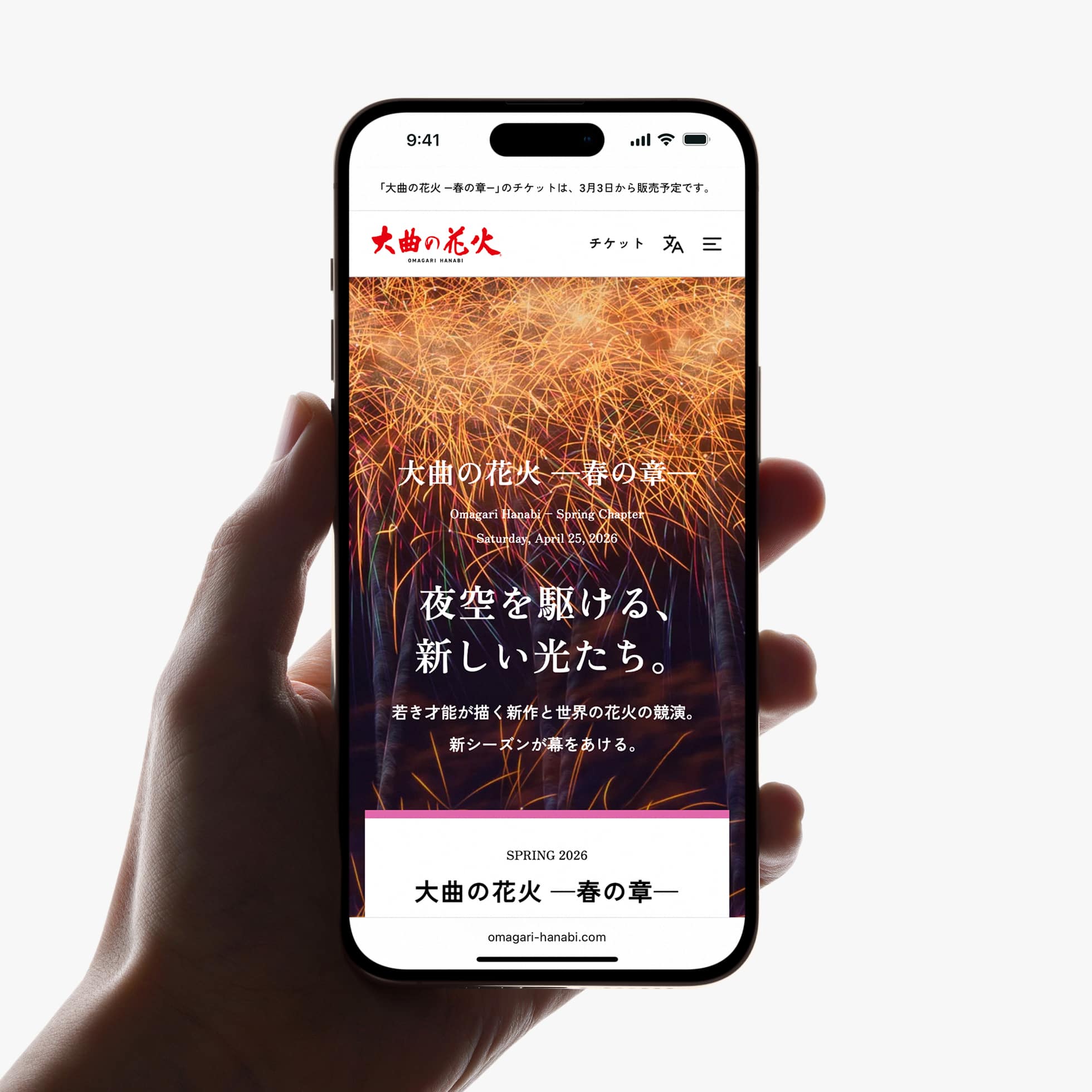
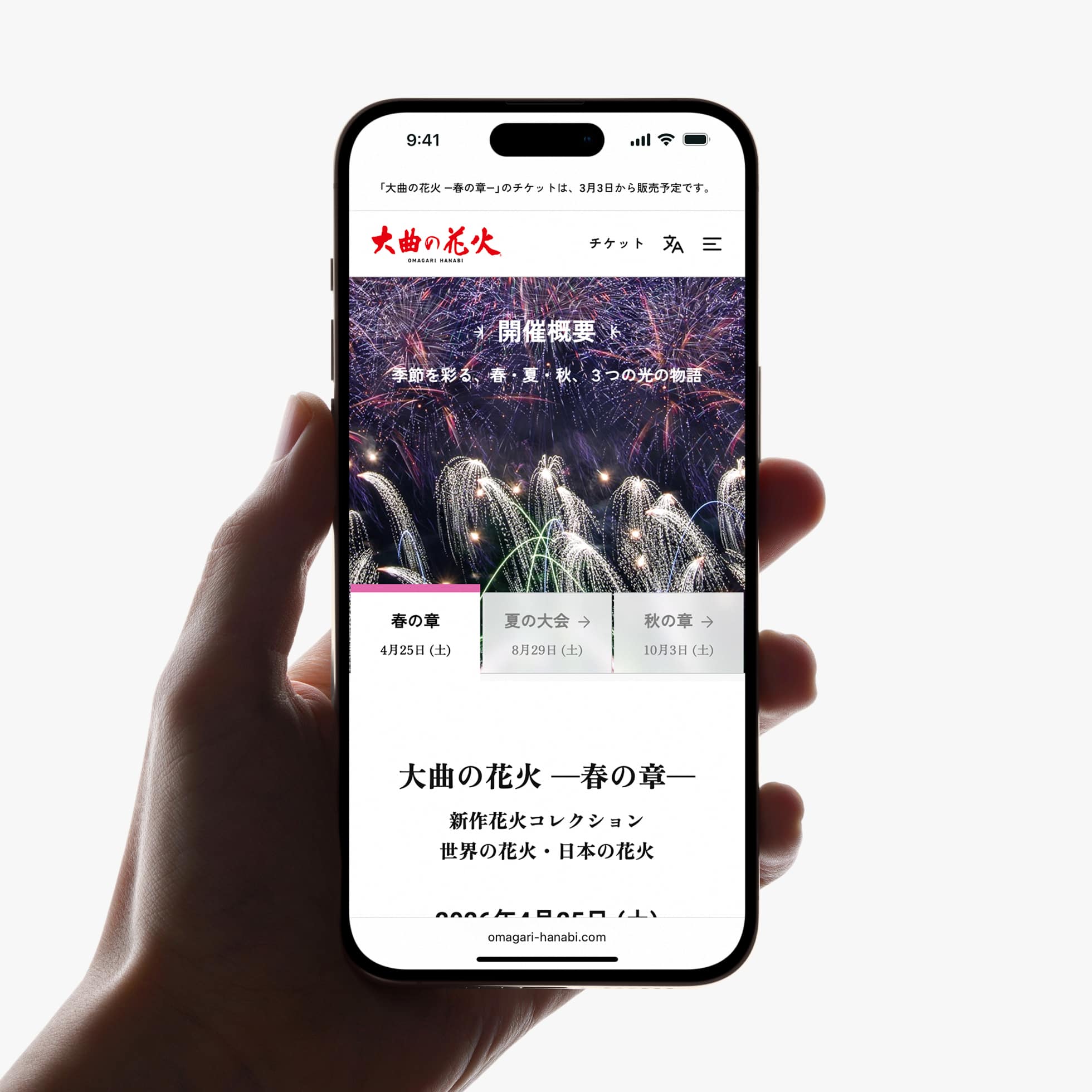
情報構造は来場者目線で再設計し、各大会の情報をはじめ、チケット、アクセス、FAQなどを直感的に把握できる構成へ整理。初めて訪れる方、高齢者、スマートフォン利用者、訪日観光客など、多様な利用者を想定しながら、ストレスなく目的へたどり着ける導線を設計しました。
また、CMSの導入により、段階的な情報公開や更新頻度の高いコンテンツにも柔軟に対応できる運用体制を構築。公式サイトとしての信頼性と継続的な情報発信を支える基盤を整えました。
公開後はクライアント側で自走運用を継続し、多言語・複数大会を含む複雑な情報設計も大きな問題なく運用されています。それは、表面的なデザインではなく、構造そのものが機能していることの静かな証明でもあります。
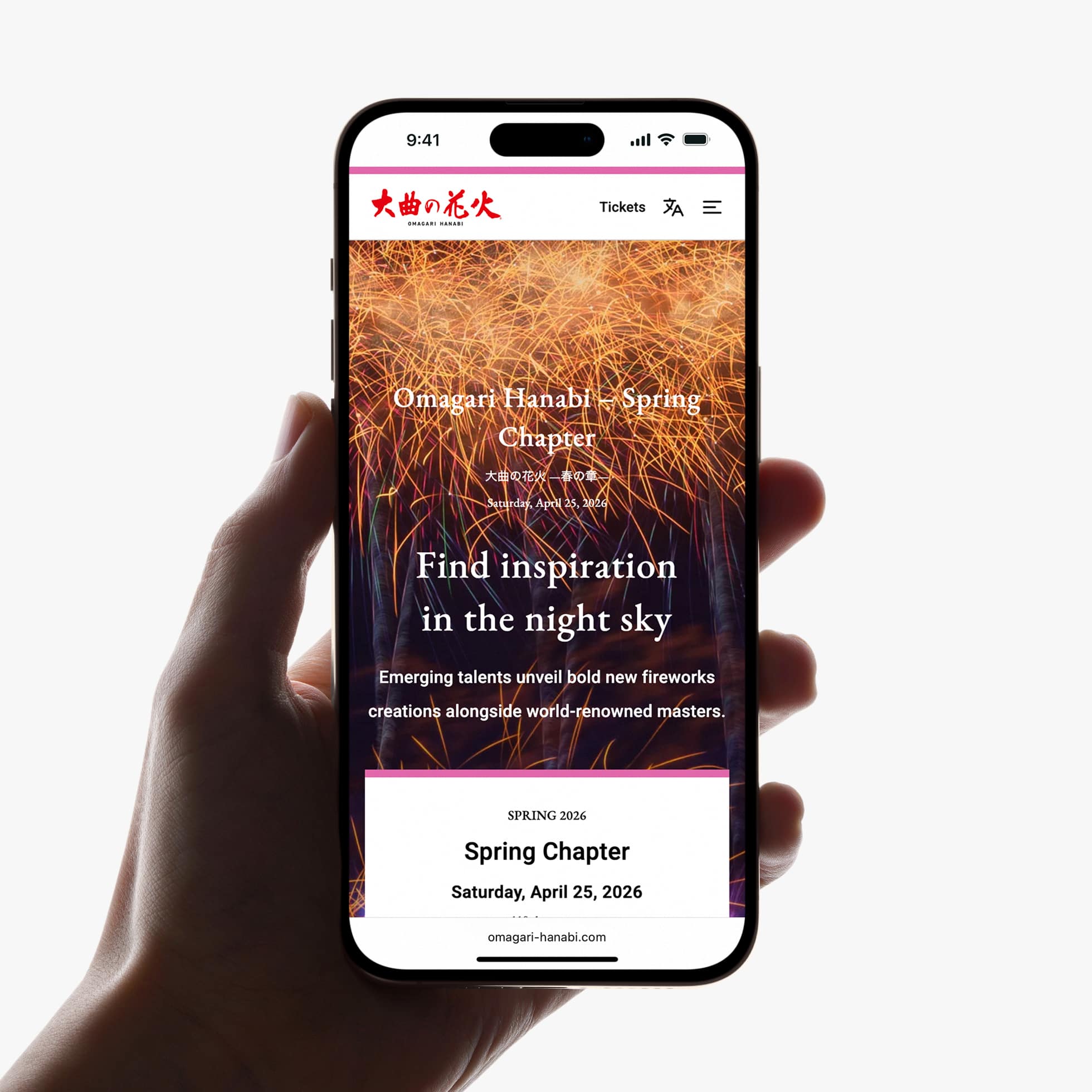
Omagari Hanabi is not one event but three — spring, summer, and autumn — each with its own audience, its own information, its own face. The previous site treated the website as a finished object. The real problem was the opposite: it had to keep working as the event kept changing.
So the first decision wasn’t about design. It was about where to anchor judgment. Rather than aiming for a single finished form, we built a structure that could be reshaped season after season and still hold together — one site, not three rebuilt every year.
The site routes visitors to the right place depending on which event they’re attending and what they need. We organized that complexity so that anyone — a first-time visitor, an older guest, an overseas traveler — could reach the information or the doorway they needed without getting lost. Bilingual support, mobile-first responsiveness, and a CMS the client could run themselves all followed from that single decision about structure.
Since launch, the client has managed the site independently, and a complex multilingual platform has run without issue — the quiet proof that the underlying judgment was sound.
目指したのは、魅力を伝えるだけではなく、来場者が必要な情報に迷わずたどり着き、安心して大会へ参加できる情報体験をつくることでした。
情報構造は来場者目線で再設計し、各大会の情報をはじめ、チケット、アクセス、FAQなどを直感的に把握できる構成へ整理。初めて訪れる方、高齢者、スマートフォン利用者、訪日観光客など、多様な利用者を想定しながら、ストレスなく目的へたどり着ける導線を設計しました。
また、CMSの導入により、段階的な情報公開や更新頻度の高いコンテンツにも柔軟に対応できる運用体制を構築。公式サイトとしての信頼性と継続的な情報発信を支える基盤を整えました。
公開後はクライアント側で自走運用を継続し、多言語・複数大会を含む複雑な情報設計も大きな問題なく運用されています。それは、表面的なデザインではなく、構造そのものが機能していることの静かな証明でもあります。
Omagari Hanabi is not one event but three — spring, summer, and autumn — each with its own audience, its own information, its own face. The previous site treated the website as a finished object. The real problem was the opposite: it had to keep working as the event kept changing.
So the first decision wasn’t about design. It was about where to anchor judgment. Rather than aiming for a single finished form, we built a structure that could be reshaped season after season and still hold together — one site, not three rebuilt every year.
The site routes visitors to the right place depending on which event they’re attending and what they need. We organized that complexity so that anyone — a first-time visitor, an older guest, an overseas traveler — could reach the information or the doorway they needed without getting lost. Bilingual support, mobile-first responsiveness, and a CMS the client could run themselves all followed from that single decision about structure.
Since launch, the client has managed the site independently, and a complex multilingual platform has run without issue — the quiet proof that the underlying judgment was sound.
Visit website — Japanese / English
「長持ちして、ちゃんと使われるWebサイト」の裏側
春・夏・秋と変化する情報構造をどのように整理し、設計したのか。デザインの判断基準についてまとめた思考ノートです。
noteでプロセスの詳細を読む →
∵
Credits:
Producer: Plat’Home Co., Ltd.
Co-Producer: Hiroshi Okamura (5&UP)
Director / Designer: Hideki Owa (PULP)
Technical Director / Engineer: Kouhei Yamamoto (eggraphix)
Copywriter: Aki Mineta
Japanese-English Translators: David Willoughby & PULP
Client: Omagari Chamber of Commerce and Industry
December 2025
Previous / Home / Next